

In stock
1940
Domaine Marie Rivesaltes 1940 AOC 0,75l
- Format
- 0,75l
- Unit
- 1 × 0,75l
- Condition
- Overall: perfect
€315
incl. VAT
Details
The vintage
A decent Bordeaux year, a lost one in Champagne
1940 turns 86 in 2026
Most bottles arrive in 7–10 working days, tracked; each bottle shows its own delivery time · transit cover optional at checkout







A decent Bordeaux year, a lost one in Champagne
In 2026 a bottle from 1940 marks a 86th birthday or anniversary
Bordeaux did better in 1940 than the year's history suggests. Looking back on the summer of the German invasion, Château Margaux writes that the natural conditions do not seem to have been really unfavourable: it was the war that made 1940 so difficult, and few memories of the vintage remain. Tastingbook describes a warm, dry year with balanced, harmonious reds, better than those of 1939, and the wine-pages anniversary chart calls it very good Bordeaux in short supply. Champagne fared worst: in the history published by the Union des Maisons de Champagne, 1940 is the one war year in which the harvest was lost. Port had an average year, which Michael Broadbent rated two stars out of five, and only two houses declared, Taylor's among them. In Burgundy, by Tastingbook's account, the reds were subtle and fine after an early flowering, and Rioja's Consejo Regulador classes 1940 as 'normal'.
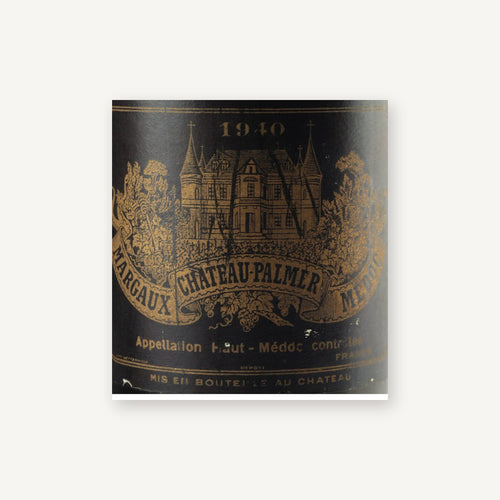
For a 1940 bottle that is meant to be opened, we would look first at the spirits. Armagnac no longer ages once it is in bottle, so the date on a Dupeyron or a Baron de Sigognac Bas-Armagnac is simply the year of the harvest. There is also Moyet's 1940 Cognac, and single malts distilled that year by Macallan and Glen Grant. Port lovers have Burmester's Colheitas, single-harvest tawnies aged in cask, with the level into the neck, and Blandy's Sercial Madeira. If it must be Bordeaux, choose by condition as much as by name: Lafite and Rauzan-Gassies are listed in good overall condition, Palmer and Talbot at mid-shoulder, which is not unusual for the 1940s. A bottle at low shoulder is a collector's piece, kept for its label and its year.
On 12 September 1940, near Montignac in the Dordogne, four young people climbed down a shaft and found the cave of Lascaux, its walls painted with horses, stags and aurochs around twenty thousand years ago. Two months later, on 13 November, Disney's Fantasia opened at the Broadway Theatre in New York, the first commercial film released in stereo.
Fill level, label, capsule and cork, then provenance. Every bottle is checked by hand by people who have handled thousands of old bottles, and we write down the flaws as well as the good news. What the fill levels mean · How to choose a birth-year wine
Real people, not a chatbot
The people who answer are the same people who check and pack the bottles. Ask for photographs, a condition report or advice on a year and you get a straight answer from the ANNO team, Monday to Friday, 9:00 to 18:00 CET.
Yes, better than its reputation suggests. Château Margaux writes that the natural conditions of 1940 do not seem to have been really unfavourable, and that it was the war, not the weather, that made the year so difficult. Tastingbook describes a warm, dry season and balanced reds that outshine those of 1939, and the wine-pages anniversary chart calls 1940 very good Bordeaux in short supply. Little was recorded about the wines at the time.
Yes, but only a little. 1940 was an average Port year: Michael Broadbent rated it two stars out of five, and only two houses declared a vintage, Taylor's among them. The 1940 Ports we offer are tawnies: Burmester's Colheitas, from a single harvest and aged in cask for at least seven years under the Port rules, and an old Port from Real Companhia Vinícola. A Vintage Port, by contrast, is bottled two to three years after the harvest and ages in glass.
The harvest was lost. In the history published by the Union des Maisons de Champagne, 1940 is the one war year in which the region did not make a good wine: the Germans crossed the Marne in June, and the page speaks of so many disasters that the harvest was lost. Many men were prisoners or forced labourers, and pickers were hard to find. From 1941 Champagne made a good wine every year, and in 1943 an exceptional one.
If the bottle is to be opened, a spirit from the year. Armagnac stops ageing once it is bottled, so a 1940 Dupeyron or Baron de Sigognac carries the year of the harvest. Brandy and whisky drinkers can also have a Moyet Cognac, or a single malt distilled in 1940 by Macallan or Glen Grant. For someone who collects Bordeaux, a 1940 Lafite, Mouton Rothschild or Palmer is a fine present to keep, chosen for its label, its fill and its history rather than for drinking.
Sometimes, but no one can promise it for a particular bottle. Old wines are sold as collectible items, as seen, because the cork and the way a bottle has been stored matter more than the vintage. Read the fill first: mid-shoulder, as on our Palmer and Talbot, is not unusual for the 1940s, while low shoulder, as on one of the Moutons and on the Rauzan-Ségla, marks a collector's object. A stained or worn label is normal at this age; a perfect one deserves a second look.
Yes. Several single malts distilled in 1940 were bottled decades later. There are Macallans from 1940 bottled at 33, 35 and 40 years old, among them a Fine & Rare and a Red Ribbon, as well as The Macallan The Reach, and Gordon & MacPhail bottled a Glen Grant 1940 at 45 years old. The date on these labels is the year of distillation, which makes them a rare way to mark 1940 for a whisky lover.
No WhatsApp? Write to info@anno.wine, call +39 352 093 3408 or send an SMS.